

Travel to the Italian Riviera: The Complete Guide to Towns, Beaches, and Cinque Terre.
The Italian Riviera stretches along the Ligurian coast in northern Italy, offering a perfect blend of breathtaking natural beauty, vibrant fishing villages, turquoise beaches, and authentic Italian culture.
A rich experience of flavors, landscapes, and magical moments awaits you—a journey suited for sea lovers, culture and history enthusiasts, and for anyone who wishes to pause for a moment, take a deep breath, and surrender to the slow rhythm of life by the coast.
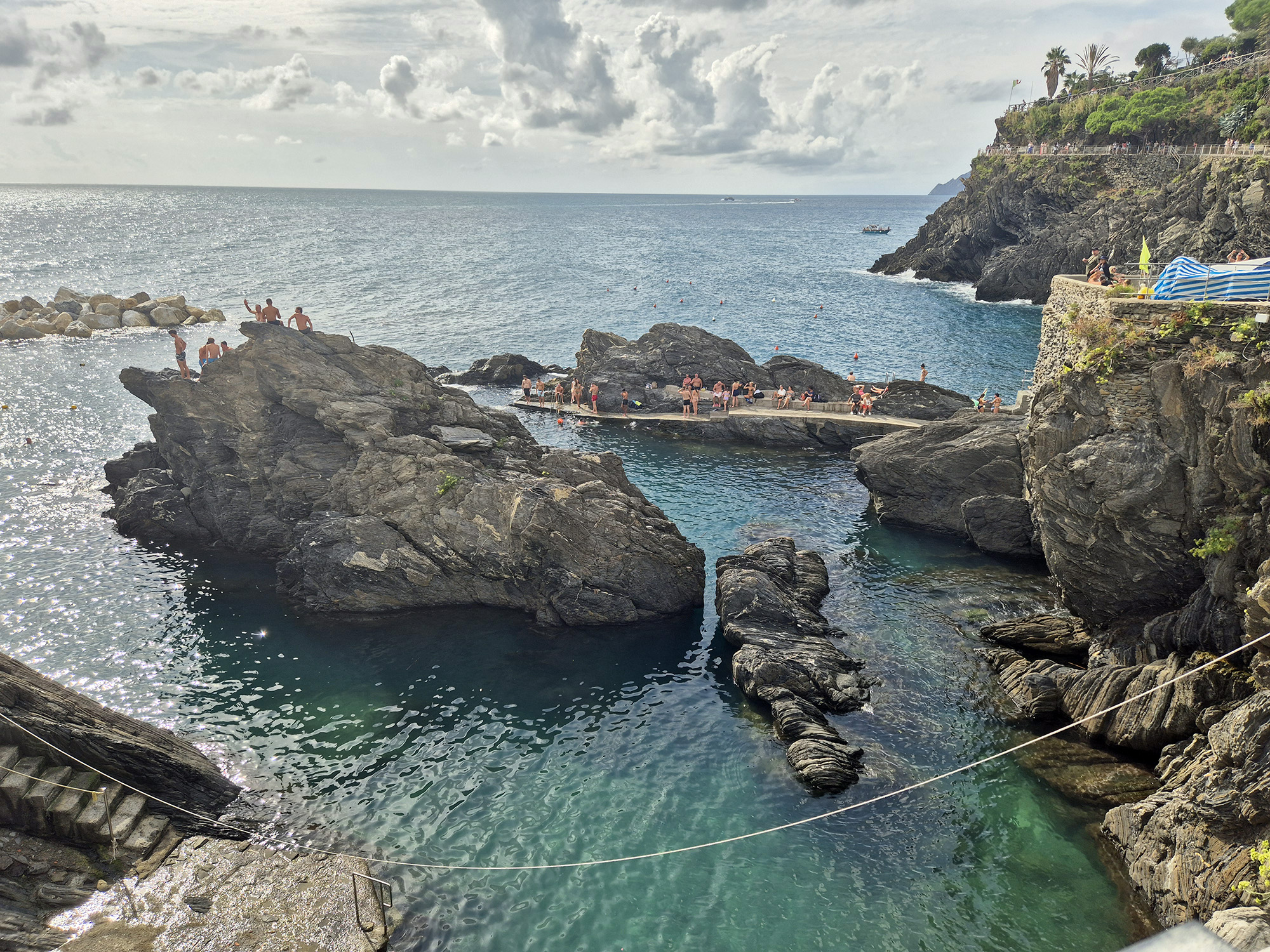
This trip can be done by car, but you can also skip the car and get around using the local train that runs between the five villages. I traveled by car, but since the regional train (without the hassle of finding parking and the stress of driving) appealed to me much more, I’ll detail both options in this post.
A Trip on the Cinque Terre Local Train – The Easy Way to Discover the Villages.
If you land at Milan Malpensa Airport, the journey to the Riviera begins with a trip to the city of Milan, from where you continue by train toward Cinque Terre.
There are two options: a direct bus to Milan’s central train station, about 50–60 minutes for around €10, or the Malpensa Express train from the terminal, about 50 minutes for around €13.
From Milan, you take a train to Levanto or La Spezia, and from there transfer to the Cinque Terre local train, which stops at all five villages.
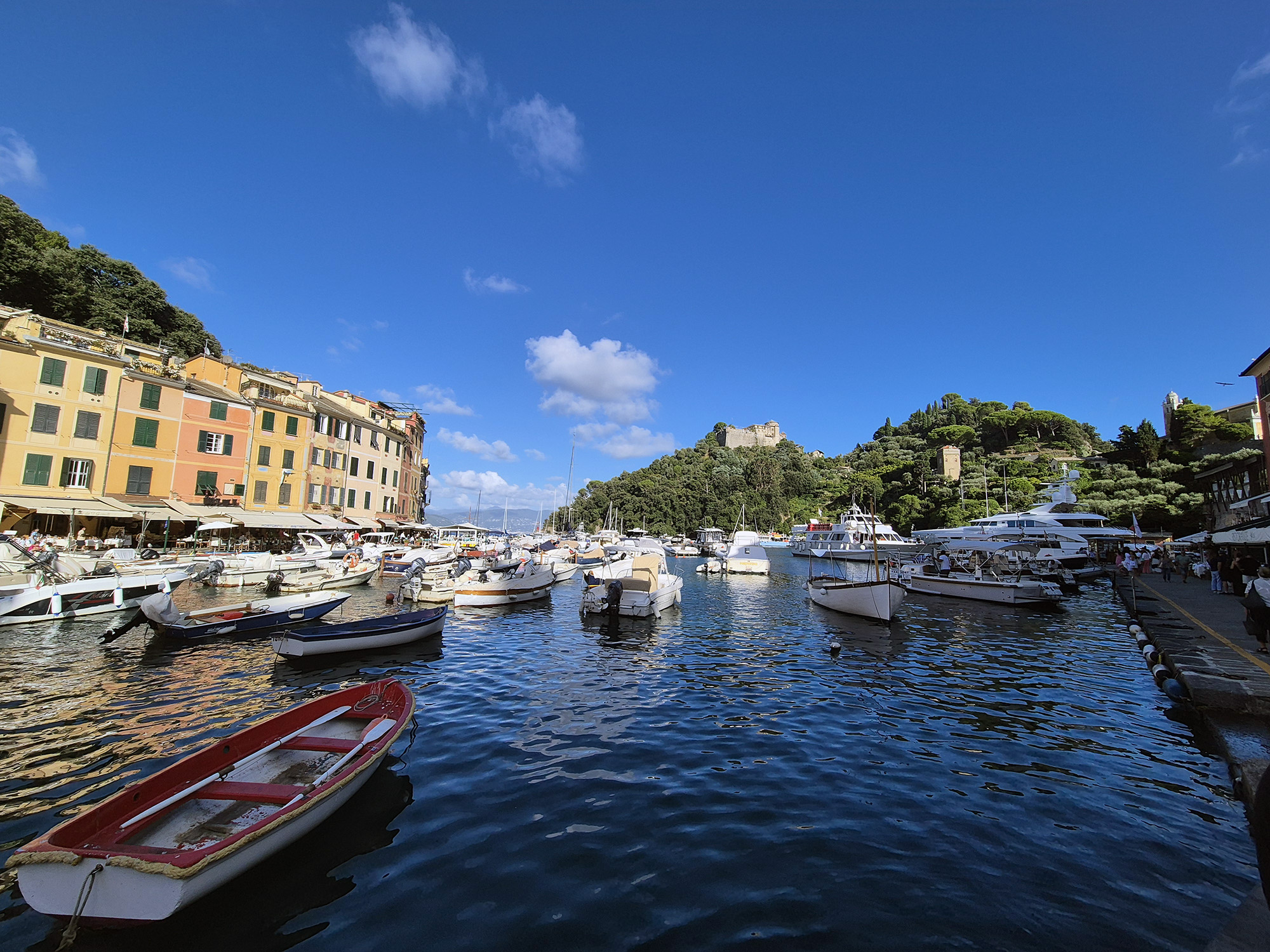
Santa Margherita Ligure – The Harbor Town Leading to Portofino and Cinque Terre.
Santa Margherita Ligure is an elegant and lively harbor town, serving as an ideal starting point for exploring the Ligurian Riviera. Its long promenade curves along a turquoise bay, lined with seafood restaurants, cafés, and boutique shops, alongside the town beach and small marina. You can also enjoy green gardens and classic Italian architecture here.
Thanks to its central location, it makes an excellent base for day trips. From here, it’s easy to reach the exclusive Portofino, the hidden San Fruttuoso Abbey, or the small and picturesque beaches scattered along the southern Ligurian coast.
A Trip to Portofino: Italy’s Luxury Gem.
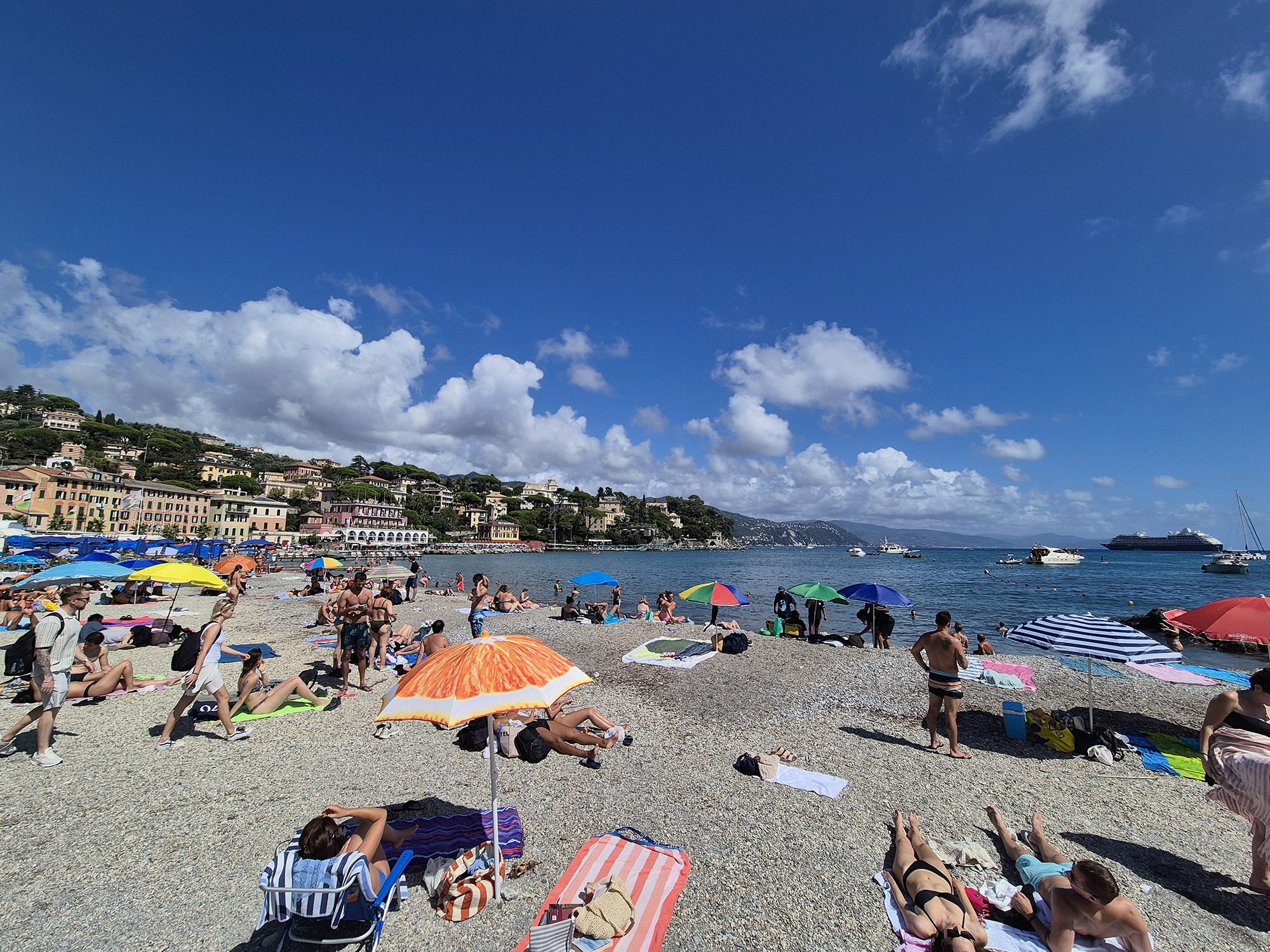
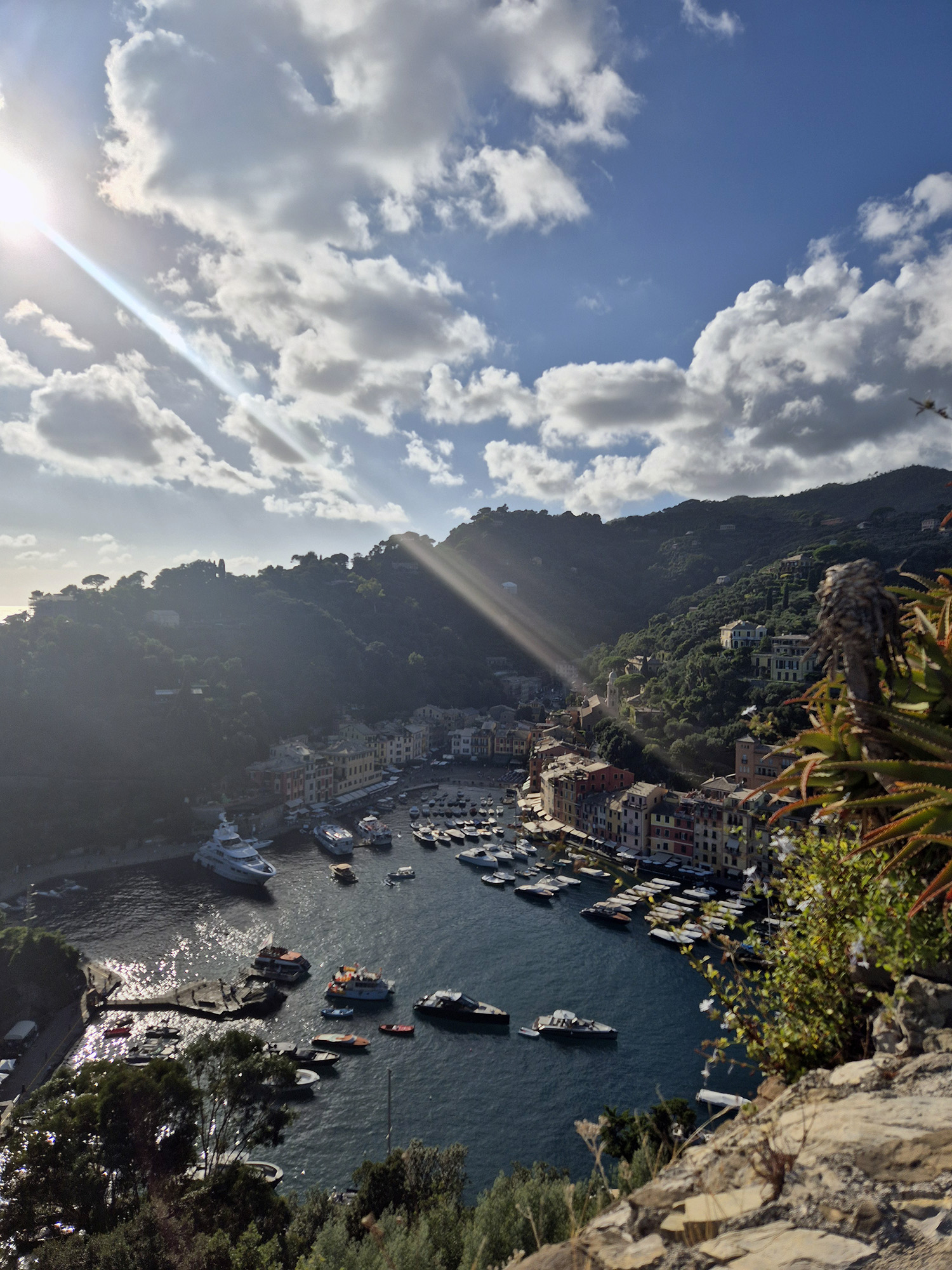
Portofino, a small and impressive harbor town, is considered one of the most beautiful and luxurious places in Italy.
In the small central square, the Piazzetta, you can sit for a coffee or a cocktail facing the yachts.
The town offers small boutique shops and restaurants serving seafood and pasta. Nearby, you’ll find stunning attractions such as the Church of San Giorgio with its panoramic viewpoint, the historic Castello Brown with its gardens and unique views, and hiking trails in the Portofino Regional Park.
A visit to Castello Brown has become a popular Instagram photo spot, and the view from the top is well worth the climb (and the entry fee of €8 per person over the age of 12).

Sestri Levante – Baia del Silenzio: The Quiet and Picturesque Bay of Liguria.
Between Portofino and Cinque Terre stretches a stunning coastline with several stops worth considering. Sestri Levante – Baia del Silenzio is a small and picturesque bay, one of the most beautiful in the area, with calm waters and colorful houses along the shore—perfect for photos and a quick swim.
Moneglia – a less touristy seaside town with a long, comfortable sandy beach surrounded by green mountains.
Deiva Marina – a wide sandy beach with very clean water, also suitable for families.
Bonassola – just before entering Cinque Terre, a beautiful sandy beach with deep turquoise waters and a charming little town with small cafés.
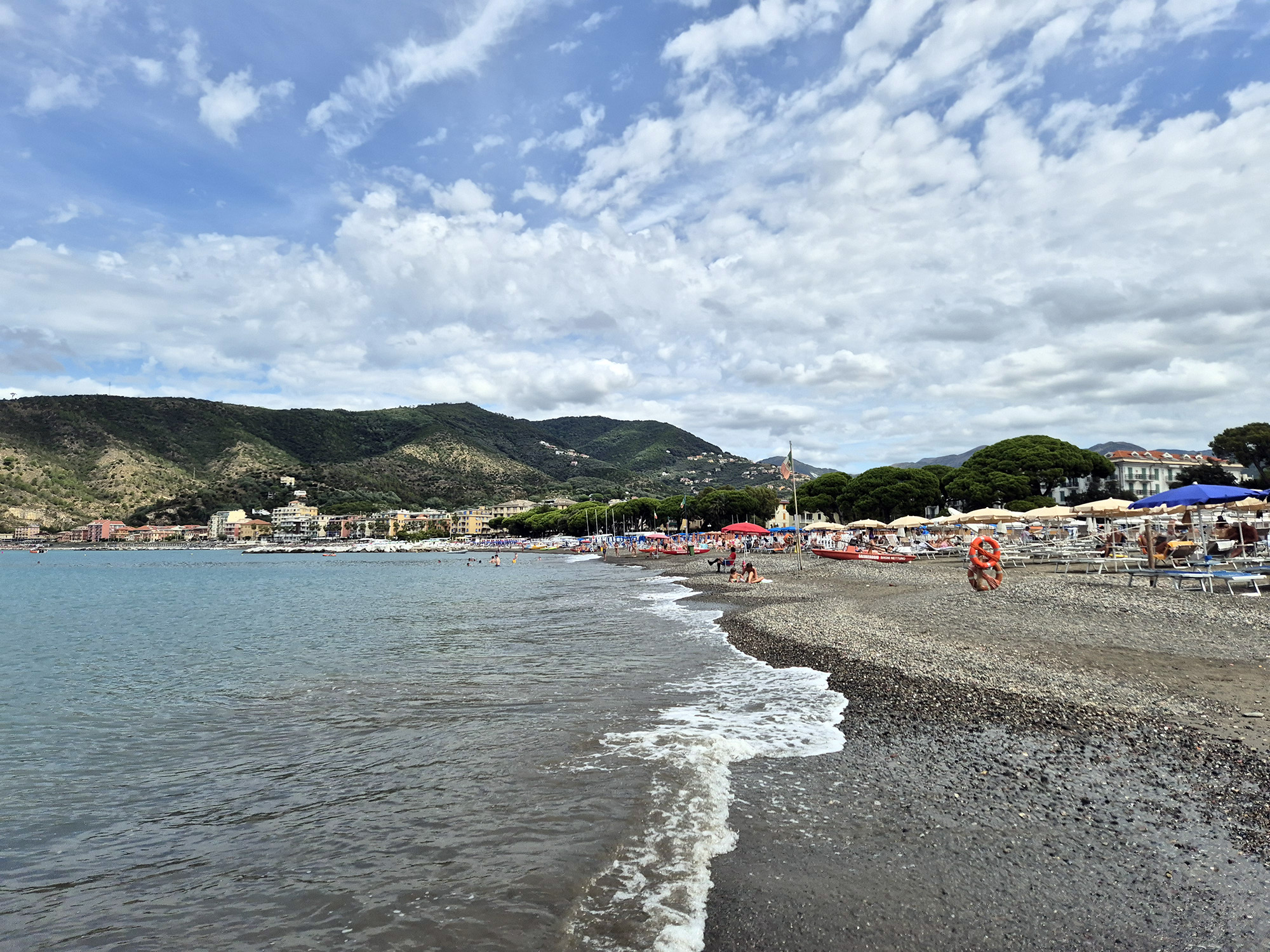
We chose Baia del Silenzio in Sestri Levante, one of the most romantic places on the Ligurian Riviera.
The small bay is wrapped in colorful houses that touch the water, creating an intimate and tranquil atmosphere. The beach here is especially quiet, with a picturesque view that looks perfect from every angle. Small fishing boats sway on the waves, and golden sunsets paint the sky in turquoise and orange.
It’s an ideal place for a peaceful getaway—to sit on the soft sand, stroll along the little promenade, and simply let the calm of the bay wash over you.
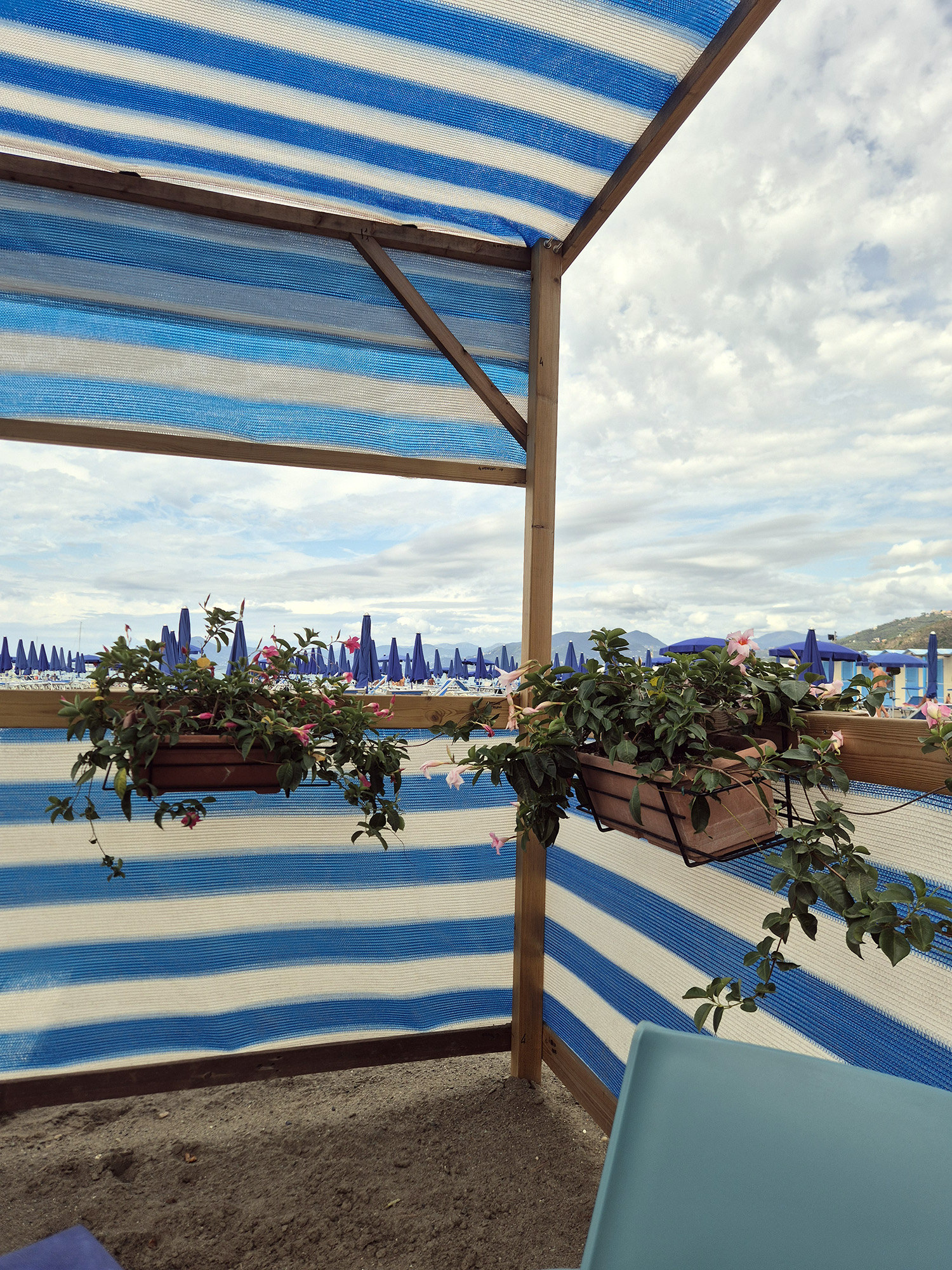
Manarola – The Colorful Village and the Famous Terrace of Cinque Terre.
Manarola is one of the most picturesque villages in Cinque Terre. Built on a dramatic cliff that spills into the Ligurian Sea, its colorful houses cling to the slope, appearing as if they are floating above the turquoise bay. Narrow alleys wind between small restaurants, local wineries, and an ancient church.
Eventually, you arrive at the famous viewpoint—a stunning terrace overlooking the entire village.
Here you can understand why Manarola is considered one of the most iconic images of Italy, and it’s no wonder it served as direct inspiration for Pixar’s film Luca.
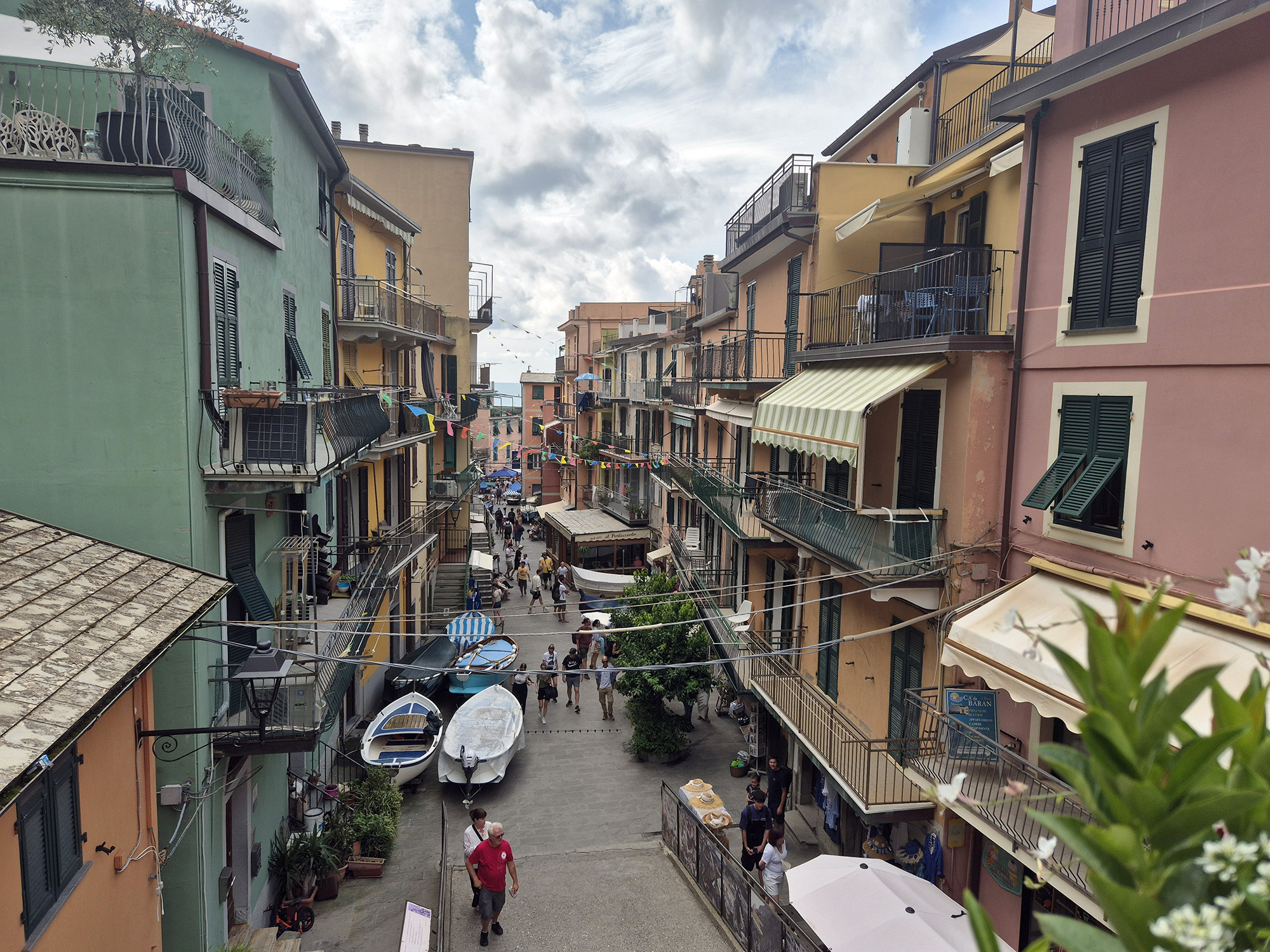
Monterosso al Mare – The Village with the Sandy Beach of Cinque Terre.
Monterosso al Mare is the largest village in Cinque Terre and the only one with a wide sandy beach. The colorful houses, fishing boats, and small promenade create a lively atmosphere, and if you feel like a snack, you’ll find local limoncello and fresh focaccia here that you definitely shouldn’t miss.
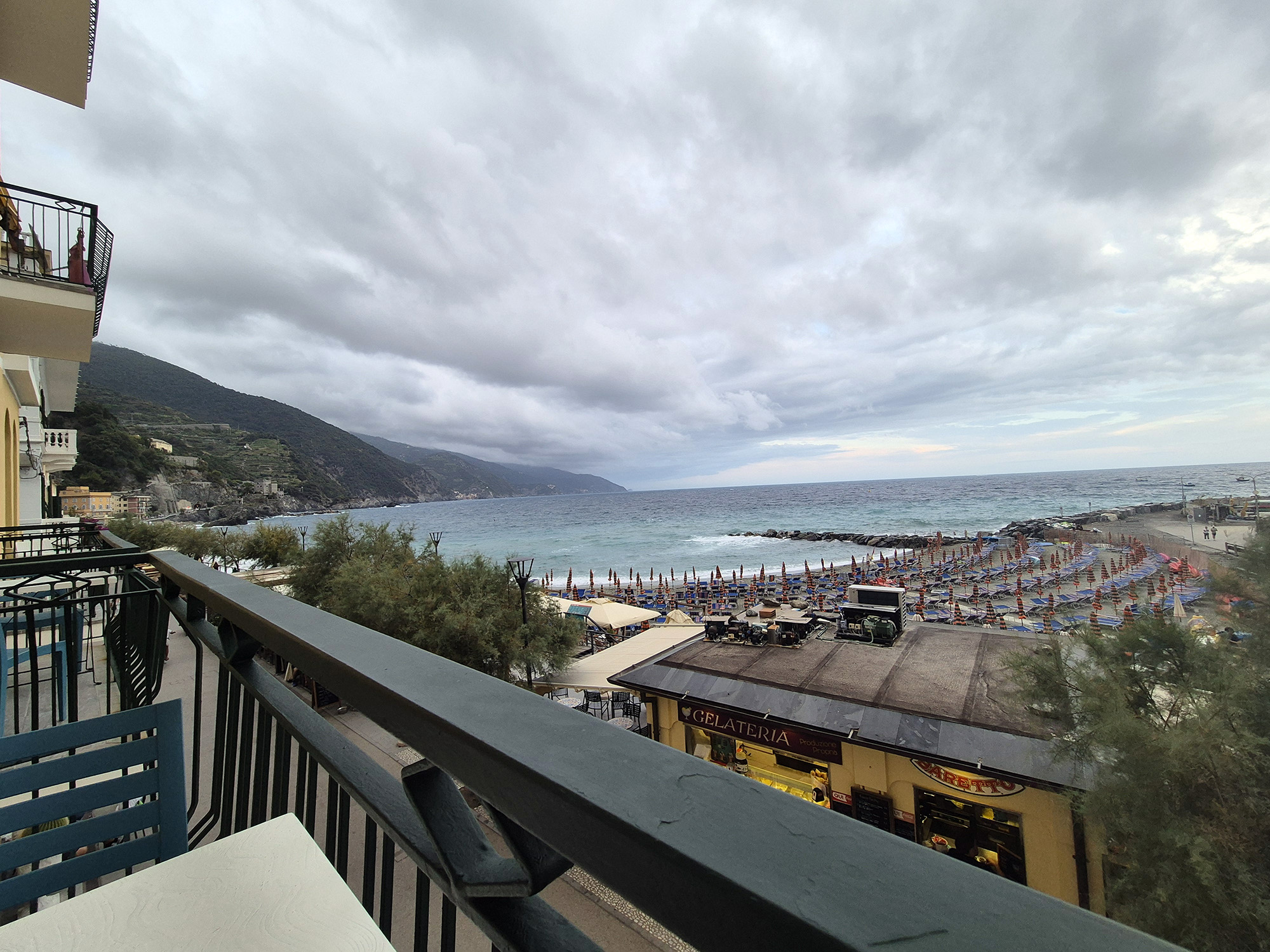
Luca – Pixar Meets Cinque Terre and the Italian Riviera.
When wandering through the colorful streets of Monterosso or enjoying the dramatic views of Manarola, it’s hard not to feel like you’ve stepped straight into an animated movie scene. The villages of Cinque Terre—especially Monterosso and Manarola—served as a direct source of inspiration for the creators of the film Luca.
In the movie, we encounter Portorosso, a fictional fishing village filled with boats, narrow alleys, and an endless turquoise sea.
The image was born from a blend of Portofino, Monterosso, Manarola, and other landscapes of the Ligurian Riviera, which together created the authentic Italian magic. A visit to Monterosso offers the experience of its wide sandy beach, while in Manarola, you can enjoy the picturesque terrace overlooking the colorful houses clinging to the cliff.
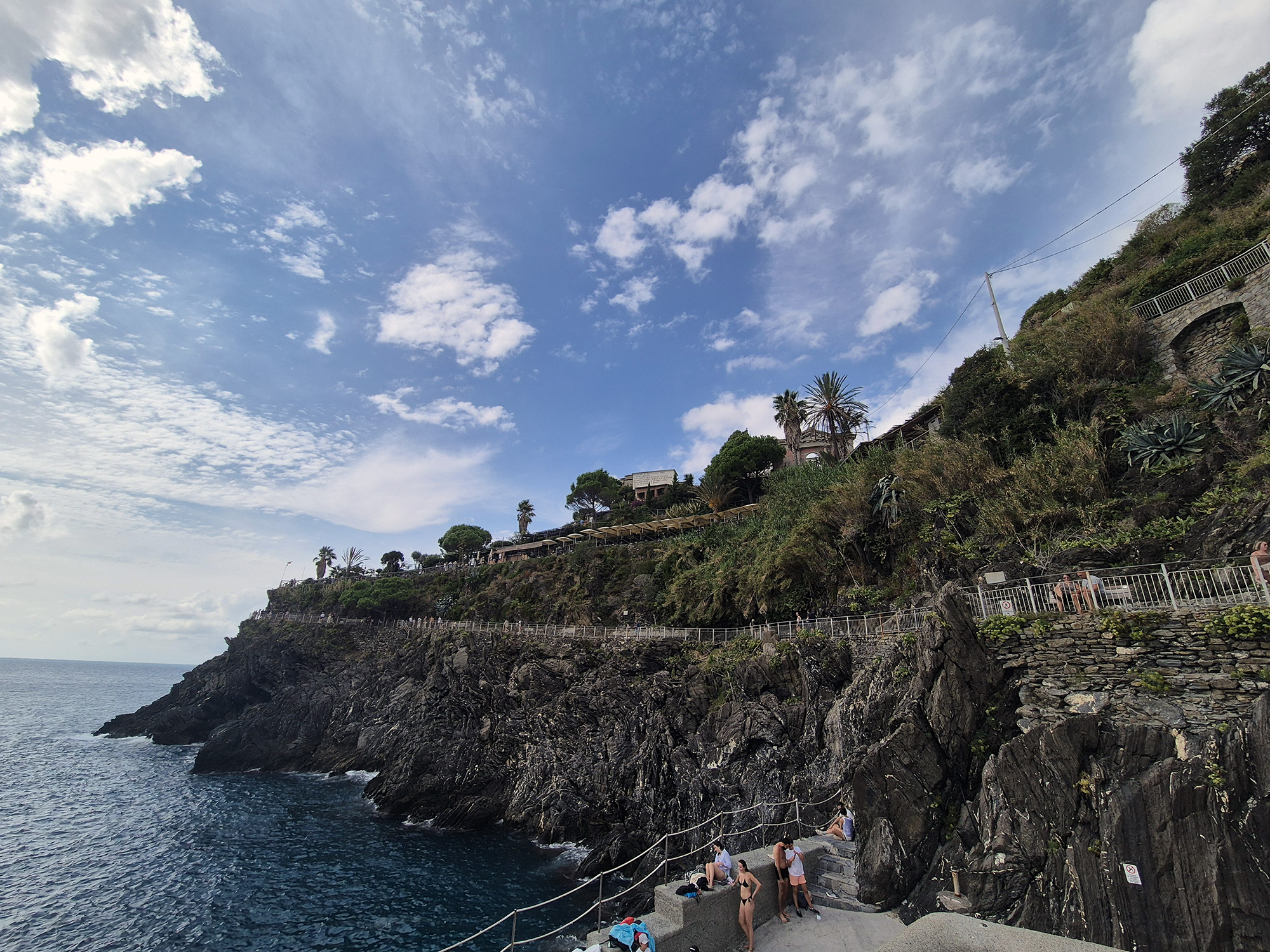
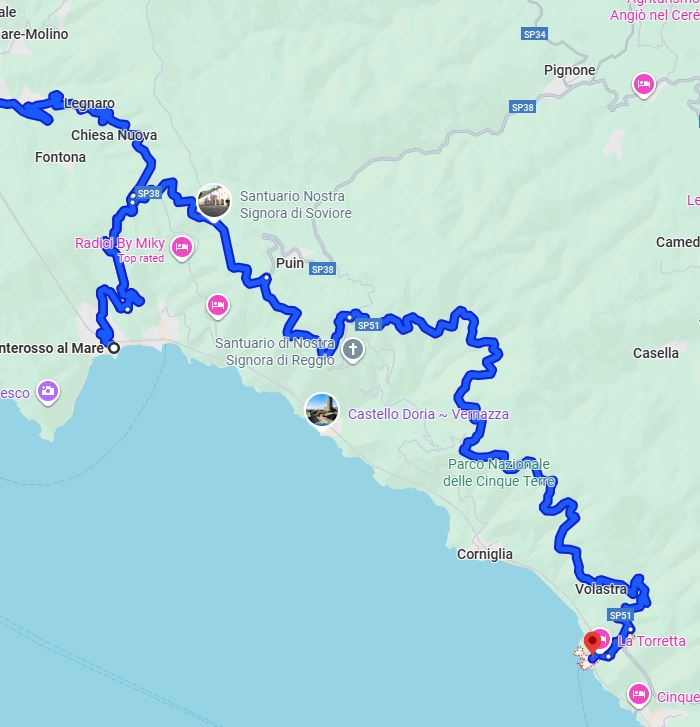
The Winding Road to Cinque Terre – A Driving Challenge with Breathtaking Views.
Cinque Terre sits right on the cliffs, and to get there by car you need to drive up and down narrow, winding, and steep roads. The scenery is spectacular, but it takes time and requires concentration.
Additional Beaches on the Way from Cinque Terre to Pisa – Where It’s Worth Stopping.
If you continue south toward Pisa, there are a few more notable beaches worth considering for a stop.
Marina di Carrara – a wide sandy beach with a more relaxed atmosphere and many private beach clubs, suitable for a quick and less crowded stop.
Marina di Massa – a popular seaside town with a promenade, bars, and restaurants—is perfect for combining a swim with some time in town.
Forte dei Marmi – the region’s upscale beach, organized and well-kept, offering full services, ideal for those seeking an elegant resort experience.
Viareggio – the largest and most urban beach, with a long Art Nouveau–style promenade, shops, restaurants, and galleries, offering a lively, city-like atmosphere.
All these beaches are located directly along the wide coastline, right next to the A12/E80—the main highway along the Tuscan coast. Stopping at these beaches means you practically exit straight from the highway onto the beach or its nearby parking, avoiding the winding mountain roads required to ascend or descend into Cinque Terre. After the stop, the road continues directly on the A12/E80 south to Pisa, with no need to return to narrow roads.
The advantage of these beaches lies exactly in their simplicity and convenience: they give you a taste of the sea without the hassle of mountain roads and shorten the return to the main route toward Pisa.
From the Airport to the Italian Riviera – A Convenient Train Route for a Trip to Cinque Terre.
When traveling by train in Cinque Terre or along the Riviera, and returning to a flight from Milan, the main connection point heading north is usually La Spezia or Levanto. Each of the Cinque Terre villages has a small station for the local Cinque Terre Express trains, which connect the villages to La Spezia in the southeast or to Levanto in the northwest. From there, you can board fast or intercity trains to the larger cities.
The main departure stations to the north are La Spezia Centrale—very convenient with frequent departures to Rome, Florence, and Milan—and Levanto, a slightly more northern option that also has trains to Milan.
The journey takes about three to three and a half hours on an Intercity or a Frecciabianca train, with the final destination being Milano Centrale. From there, you have a direct connection to Malpensa Airport via the Malpensa Express train, a ride of about fifty minutes.”
Train from Rome to Cinque Terre.
Another option for a trip along the Italian Riviera is taking the train to Rome:
In each of the five villages—Monterosso, Vernazza, Corniglia, Manarola, and Riomaggiore—there is a local train station. First, you take a local or Intercity train to La Spezia Centrale or Pisa Centrale, and from there you can board a high-speed Trenitalia train (Frecciabianca, Frecciargento, or Frecciarossa) or a direct Intercity train to Rome.
In my opinion, if you choose this route, it is highly recommended to include a stop in Florence—a city that surprised me with its beauty and cultural richness, offering a rich culinary experience and accommodation options at much more accessible prices compared to Rome.
This post is also available in:
